
It's 11:04 pm. You're in bed, scrolling a little before sleep.
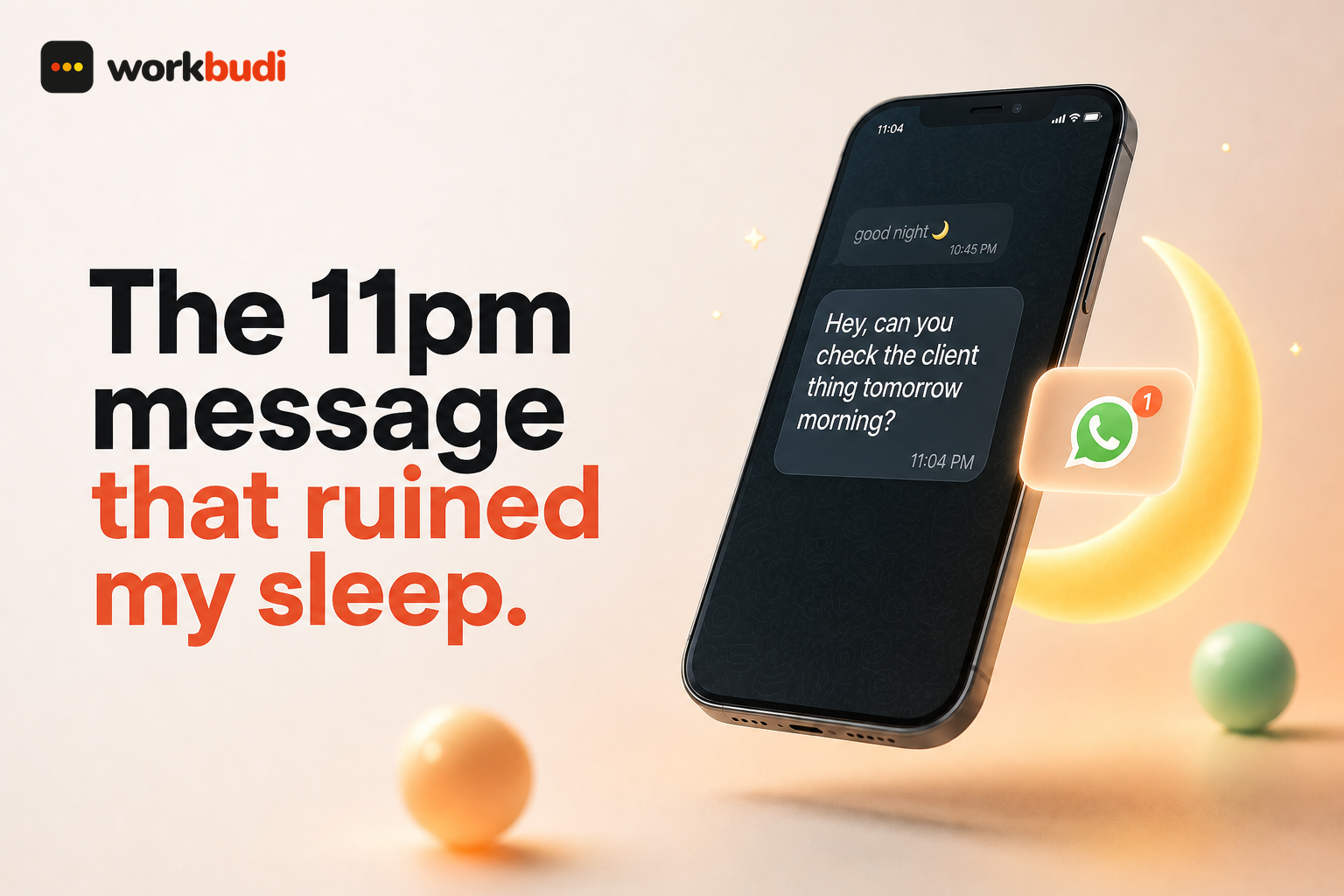
Your phone lights up. A WhatsApp message from someone on your team: "Hey, can you check the client thing tomorrow morning?"
That's it. No name. No details. Which client? Which thing? Check it for what?
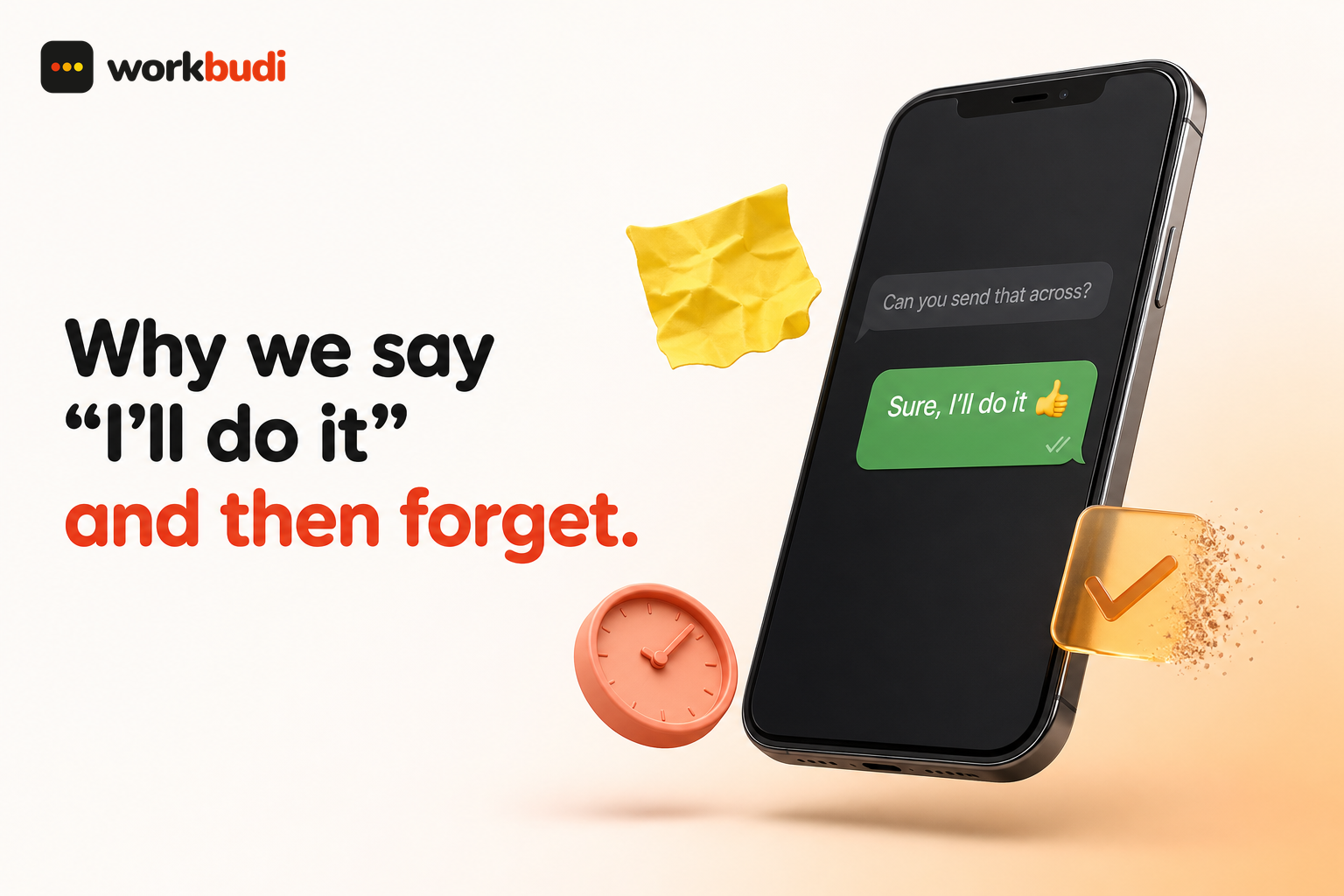
You think about replying. But it's late, and you don't want to start a conversation. So you do what everyone does. You type "sure 👍", put the phone down and close your eyes.
And then you lie there, because your brain has picked up the thread and won't let go.
Why do late messages stay in your head?
The short answer: An unfinished request keeps nagging at your mind until you either do it or write it down. Psychologists call this the Zeigarnik effect: open loops stay active in memory. A vague message at 11pm is an open loop with nowhere to put it.
That's why a one-line message can cost you an hour of sleep. The message itself is tiny. The loop it opens is not.
What makes it worse?
Three things, and the 11pm message usually has all of them.
It's vague. "The client thing" could mean five different things, so your brain tries all five.
You said yes anyway. The "sure 👍" is a promise. Now you owe something and you're not even sure what.
There's nowhere to put it. You won't open a task app in bed. So the only storage is your head, which is the worst place for it.
How do tasks get born, and then die?
Think about the life of that message.
At 11:04 pm it's born. By 11:05 it's been acknowledged with an emoji. By morning, you've got a calendar full of meetings, a few hundred new emails and a fresh batch of chats. The message has scrolled up and out of sight.
At 11am, someone asks, "Did you check the client thing?" You don't remember the thing. You scroll to find it. Maybe you do. Maybe you don't.
That's how a task dies. It's not ignored. It just never got a proper home.
Is this a discipline problem?
No. It's a design problem.
Work now arrives through the same channel as birthday wishes, memes and family chatter. A real request and a "good night 🌙" look identical on the screen. Nothing says "this one is work".
Expecting yourself to sort them perfectly at 11pm, when you're tired, is like expecting a goalkeeper to save every shot with their eyes closed.
What can you do tonight?
Here's a tiny habit that works.
- Reply with one clarifying question, not a thumbs-up. "Which client, and by when?" takes ten seconds and turns a vague ask into a real one. It also tells your team you take requests seriously.
- Write it down in one place. Open your notes app, type the task with a rough time, close it. This is the same effect in reverse: once it's written down, your brain can stop holding it.
- Pick a "last look" time. Decide that work chats get one final scan at, say, 9pm. After that, the phone is for the people you love.
None of these are glamorous. All of them help.
What if the task just showed up on its own?
This is the part we think about most at WorkBudi.
Imagine the 11:04 pm message arrives, and by the time you wake up it's already waiting on your list: Check the client thing, from Rohan, WhatsApp, with the original message attached. And a draft reply sitting there asking, "Which client, and by when?" that you can send with one tap.
That's what WorkBudi and Robin do. They read your WhatsApp, email, Slack and meetings, turn the asks into tasks, and draft the replies. Nothing is sent without your OK.
You get to sleep. The task still gets done.
The point
A good night's sleep isn't a luxury for people who have things under control. It's what lets you get things under control.
If a late message keeps you awake, the problem isn't you. It's that the message had nowhere to go. Give it somewhere to go, and you can put the phone down.
Quick answers
Why do I keep thinking about work messages at night?
Unfinished requests stay active in your mind until you act on them or write them down. A vague message makes it worse because you can't tell what the next step is.
Should I reply to work messages late at night?
A short clarifying question is better than a thumbs-up. It closes the loop for both of you without starting a long chat.
How do I stop forgetting tasks sent on WhatsApp?
Write each one down in a single place as soon as it arrives, or use a tool that reads your chats and turns requests into tasks automatically.
Parth Jain is the founder of WorkBudi, which turns emails, chats and meeting promises into tasks you don't have to type.