

The advice to “do less” can feel unrealistic when you are building a company. Customers still need answers, employees need direction and important decisions will not disappear because you want a quieter week.
But better work-life balance does not always require smaller goals. It often requires changing how the work is organized so that ambition does not depend on being permanently available.
The question is not whether you can care less about work. It is whether the business can get important work done without consuming every hour around it.
Stop treating every task as equally valuable
A long workday is often a symptom of poor prioritization. When every request is accepted and every idea becomes a project, the workload grows without a clear limit.
Choose a small number of outcomes that matter most this month. Make the trade-offs visible. If a new initiative is important enough to add, decide what will be delayed or removed. This protects the team from the quiet assumption that everything can fit if everyone tries harder.
A useful weekly question is: What are we doing because it creates value and what are we doing because nobody has challenged it?
Reduce the friction inside the workday
Not all hours produce the same amount of useful work. A day fragmented by meetings, notifications and repeated status requests may take longer than a day with clear priorities and uninterrupted focus.
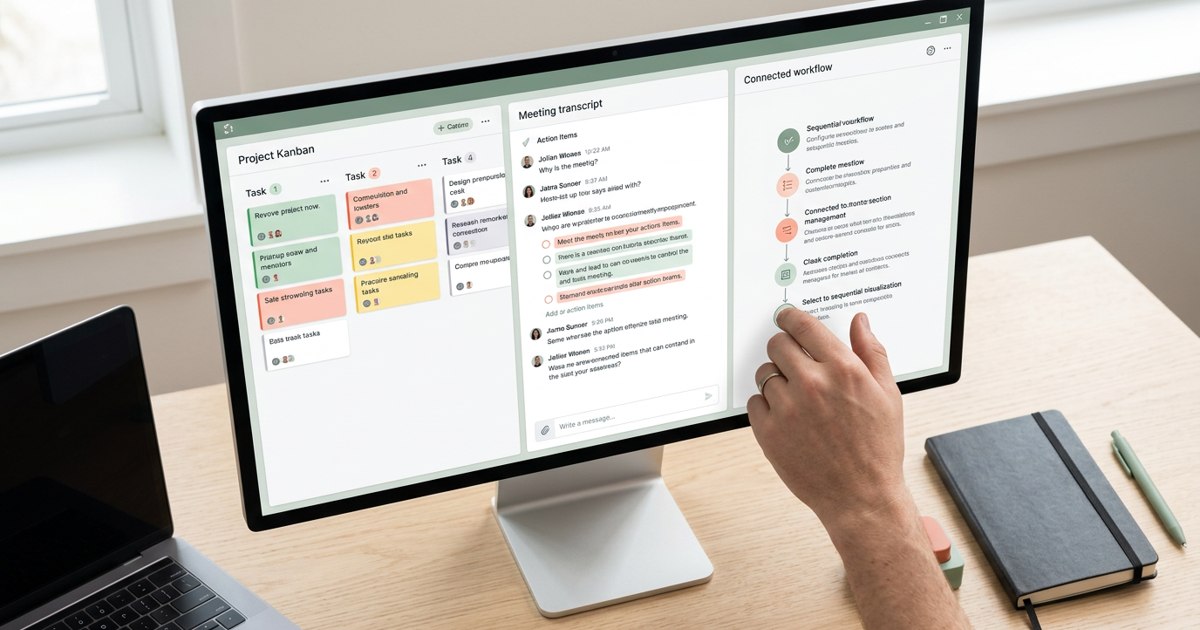
Group similar administrative tasks where practical. Use written updates for routine information. Set meeting agendas around decisions rather than status. Keep project ownership and next steps visible so people do not need to interrupt one another to find basic information.
These changes do not reduce the ambition of the work. They reduce the effort wasted getting to it.
Build boundaries that are operationally realistic
A boundary is easier to maintain when the team knows how work will continue without immediate access to you. Agree on working hours, response expectations and an escalation route for genuine emergencies.
For founders, this may mean naming someone who can handle routine customer or operational decisions. It may mean giving team leads authority within defined limits. Without these systems, a founder may feel forced to monitor every channel because too much depends on their response.
A boundary that leaves the team stranded will fail. A boundary supported by clear ownership gives everyone more independence.
Design the week around energy as well as time
Your calendar should reflect the type of work that needs your best attention. Put strategic thinking, difficult writing or important decisions into periods when you are most alert. Schedule routine administration around them where possible.
Leave space between meetings and avoid filling every available minute. Buffer time is not laziness. It is how the calendar absorbs unexpected work without pushing the entire day into the evening.
At the same time, recognize that not every week can be perfectly balanced. Product launches, customer incidents and fundraising can create temporary peaks. The key is to plan recovery after those peaks rather than allowing them to become permanent.
Stop measuring commitment by availability
When leaders praise late-night replies and constant responsiveness, the team learns that being online is a signal of dedication. People may start checking messages during meals or weekends even when nobody has asked them to.
Measure leadership and team performance through outcomes, judgment, reliability and collaboration. A person who sets a clear expectation and delivers high-quality work during reasonable hours may be contributing more than someone who is visibly active all day.
Founders set the tone through their own behaviour. If you send messages outside working hours, use scheduling features when the message does not need immediate attention. Make it clear that a late message is not automatically a request for a late reply.
Use technology to remove work, not extend the day
AI and automation can help with drafting, summarizing, meeting notes and repetitive coordination. The benefit depends on what happens to the time saved. If every saved hour is immediately filled with additional tasks, the workload may expand without improving results.
Choose a workflow, measure how long it takes and test whether a tool reduces effort or errors. Keep human review where mistakes have real consequences. Retire tools that create more checking and administration than they remove.
The goal is not to automate every part of work. It is to make routine work lighter so that human attention can be spent where it matters.
A practical weekly balance review
At the end of the week, answer these questions:
What created the most value? Identify the work that genuinely advanced a business outcome.
What created avoidable friction? Look for repeated meetings, unclear approvals, duplicated work or interruptions.
What crossed my boundaries? Note when work entered personal time and why.
What can change next week? Choose one process to simplify, one responsibility to delegate or one boundary to clarify.
What needs recovery? Make time for rest after unusually intense periods rather than waiting until exhaustion forces a pause.
When balance remains impossible
If you repeatedly cannot complete essential work without extreme hours, treat that as a capacity or operating issue. Revisit the number of commitments, the distribution of responsibilities, the quality of planning and whether the company has enough support. Personal discipline cannot indefinitely compensate for a structurally overloaded system.
Work-life balance is not a perfect split between work and personal time every day. It is the ability to pursue meaningful goals without making constant overextension the price of doing so. You do not have to lower your ambition. You may need a better way to carry it.
A quick test for your next task
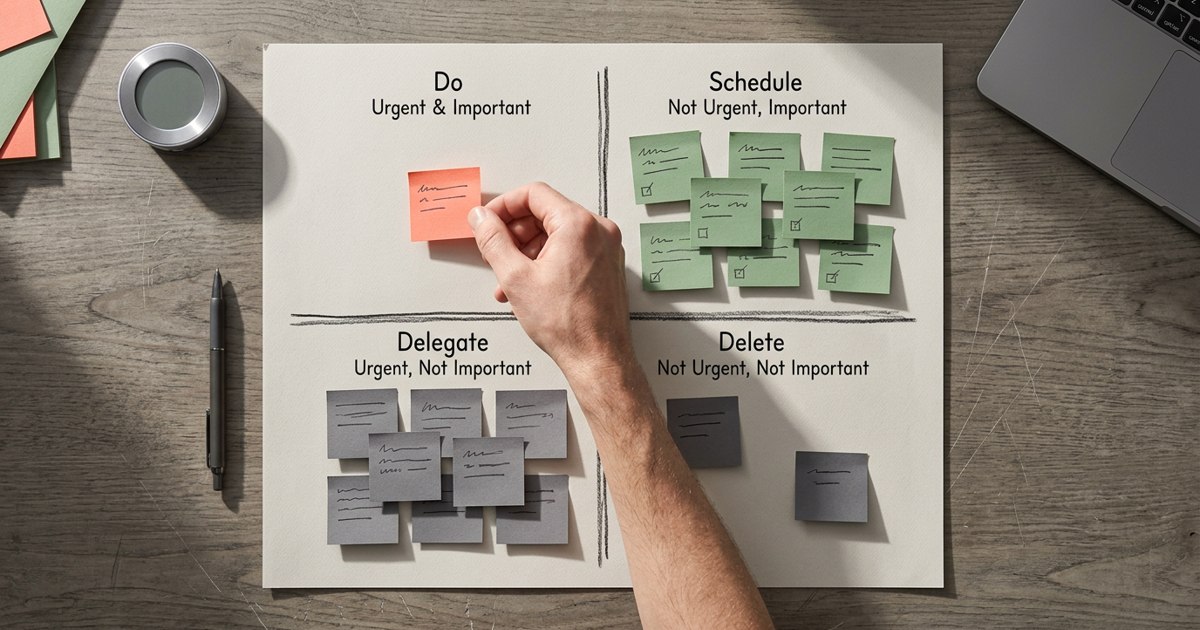
Before adding another task to the day, ask whether it is important now, whether it can wait and what it will displace. If it is genuinely urgent, choose what must move to make room. If it is not urgent, schedule it rather than allowing it to interrupt focused work. If the task has no clear outcome, clarify the purpose before starting.
This simple pause helps interrupt the reflex to equate motion with progress. You do not need a perfect productivity method. You need a repeatable way to protect attention, finish meaningful work and question activity that exists only because it has become familiar.