

There is a point where adding one more task does not make you more productive. It makes everything you are already doing harder to finish well.
This is the productivity trap: the belief that better performance always comes from doing more, moving faster or fitting another task into the day. It can be especially tempting in startups, where the workload is large and the pressure to make progress is constant.
But output is not the same as effectiveness. A person can complete more small tasks while delaying the decision that matters most. A team can launch more features while making the product harder to use. A founder can attend more meetings while becoming less available for the judgment only they can provide.
How doing more becomes counterproductive
The first problem is context switching. Every time you move from a strategy document to chat, then to email and back to the document, you need to reconstruct your train of thought. The cost may be invisible, but repeated interruptions can make complex work slower and more error-prone.
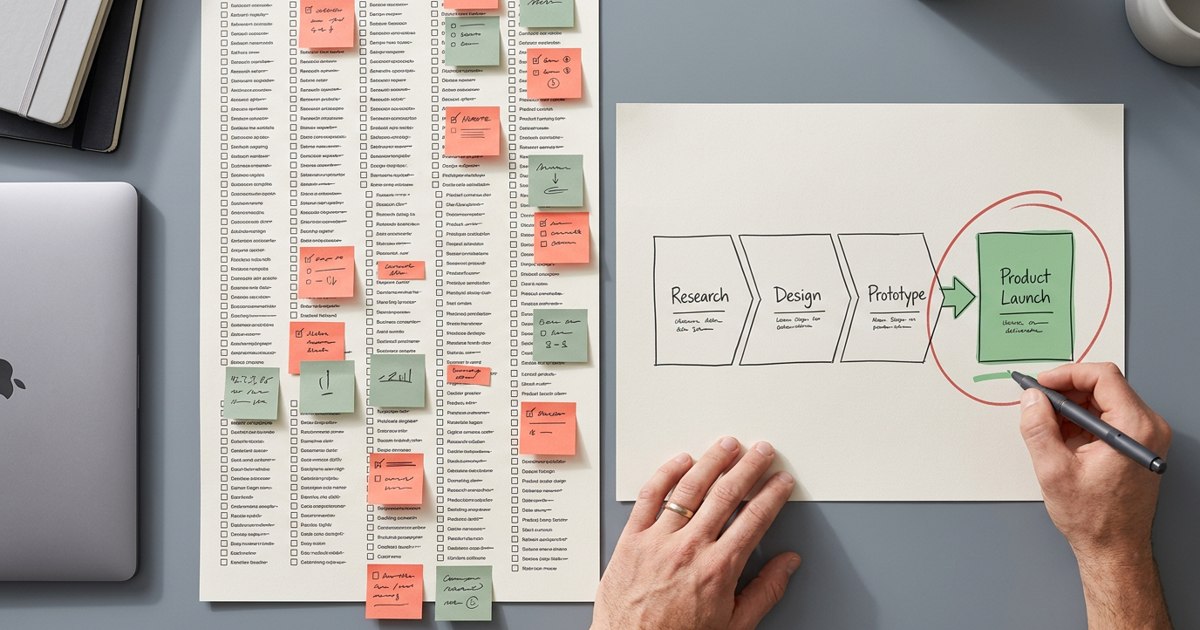
The second problem is work in progress. When too many tasks are started at once, people spend time tracking, remembering and restarting them. Dependencies become harder to see and unfinished work accumulates.
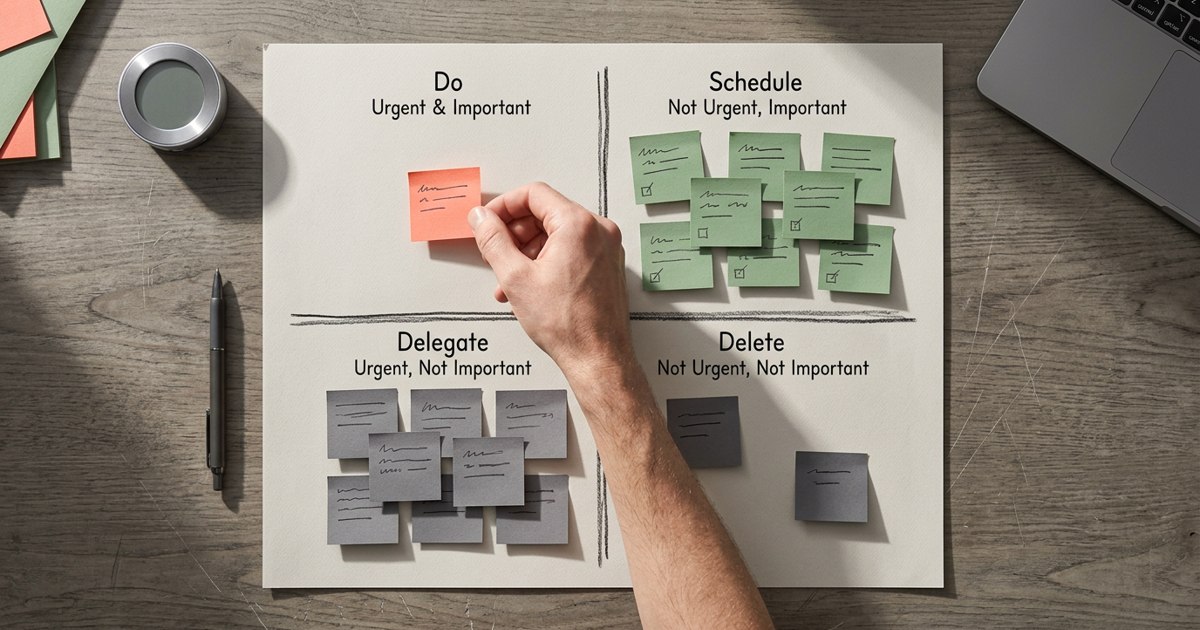
The third problem is that activity can replace prioritization. It feels safer to complete an easy task than to make a difficult decision. The to-do list gets shorter while the underlying problem remains.
Why productivity hacks can make the problem worse
New tools, time-blocking methods and task systems can be helpful. But each system also has a setup and maintenance cost. If you spend more time optimizing your workflow than improving the work itself, the system has become another task.
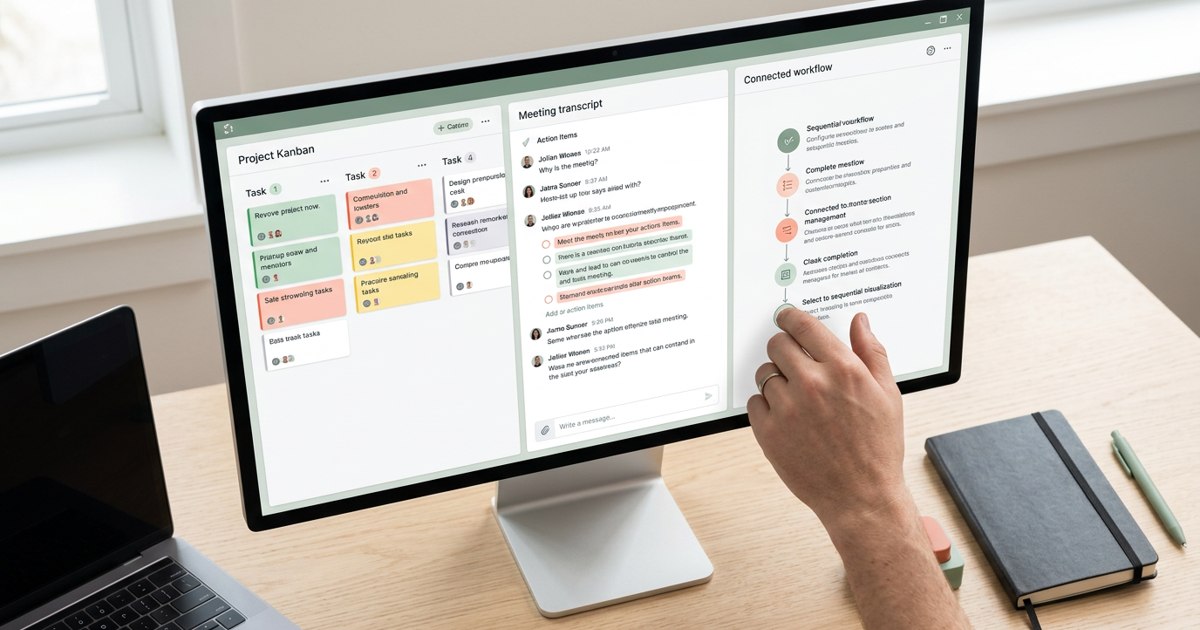
The same applies to AI. It can draft content faster or summarize a long discussion, but faster production is not automatically better production. If the team creates twice as many reports that nobody uses, the efficiency gain has little business value.
Before adopting a new method, define the friction it is meant to remove. Test whether it improves the result rather than assuming that more automation or more structure must be beneficial.
Reduce work in progress
One of the simplest ways to improve effectiveness is to limit how many important tasks are active at the same time. Finish or meaningfully advance existing work before opening more projects.
For a small team, this can mean agreeing on a short list of active priorities and making new requests wait until capacity becomes available. It can also mean identifying the one dependency that blocks several other tasks and resolving it first.
A visible queue helps people see the trade-off. Without one, every request feels like an addition rather than a choice.
Protect attention for difficult work
Not every task requires uninterrupted focus, but work involving analysis, strategy, writing or complex decisions often benefits from it. Reserve a block for one important task and silence nonessential notifications. Tell colleagues how to reach you for genuine emergencies.
Keep a scratchpad nearby for unrelated tasks that come to mind. Write them down instead of switching immediately. You can handle them during a planned administrative block.
If meetings are fragmenting the day, group them where practical and use written updates for information that does not need discussion. Do not eliminate useful collaboration simply to protect a perfect calendar. The objective is to give important work enough continuous attention.
Measure effectiveness, not just effort
Hours worked, tasks completed and messages answered can be useful context, but they are incomplete measures. Ask what changed because the work happened.
For a product team, the result might be fewer user errors rather than more features shipped. For a sales team, it might be better-qualified opportunities rather than a higher number of messages. For a founder, it might be a decision made, a leader developed or a recurring bottleneck removed.
Pair speed with quality. A process that is faster but creates more rework may not be an improvement. Track a small number of outcomes and review them regularly.
Learn to stop low-value work
Stopping is an active decision. Review recurring meetings, reports, approvals and projects. Ask whether each still serves a purpose, whether it can be simplified and whether someone actually uses its output.
Some work is necessary even when it does not directly create revenue. Compliance, security, maintenance and customer support protect the business. The goal is not to eliminate anything that feels administrative. It is to remove effort whose value no longer justifies its cost.
A useful rule is to ask what would happen if the task disappeared for a month. If the answer is unclear, investigate before continuing it by habit.
A one-week productivity reset
Monday: Choose one important outcome and define what progress looks like.
Tuesday: Identify the three biggest sources of context switching.
Wednesday: Limit active work and make lower-priority requests wait.
Thursday: Remove or shorten one recurring meeting or report that does not create value.
Friday: Review the outcome, quality and friction. Decide what to keep.
Do not add five new habits at once. The reset should make the work simpler, not create a second productivity project.
The point is not to do less for the sake of doing less. It is to stop confusing volume with value. Effective people and teams are not the ones that keep adding tasks until the day is full. They are the ones that know which work matters, protect the attention it needs and have the discipline to leave the rest unfinished.
Keep the tracker focused on ownership
A tracker is only useful when people trust it and keep it current. Agree on a small set of status labels and define what each means. For example, “at risk” should mean that the deadline or outcome may be missed without intervention. “Blocked” should identify the dependency preventing progress and who can resolve it.
Review the tracker at a consistent time and remove completed work when it no longer needs active attention. If the sheet becomes difficult to scan, simplify it. The goal is to reduce follow-up messages and make responsibility clear, not to create a second job maintaining a spreadsheet.